
What Is Self Assessment and Who Needs It?
Understand when you may need to file a UK Self Assessment tax return and what information HMRC expects.
In brief
Self Assessment is HMRC’s system for collecting tax not fully handled through PAYE. Sole traders, partners, landlords, CIS subcontractors and people with foreign, investment, dividend, capital-gains or other untaxed income may need to file, as must anyone HMRC formally asks to submit a return.
What Self Assessment is
Self Assessment is HMRC’s system for collecting tax where the full amount is not dealt with automatically, for example through PAYE. The return brings together relevant income, gains, expenses, reliefs and tax already paid so the year’s overall position can be calculated.
For sole traders, it is normally the main way business profit is reported. Being employed under PAYE does not automatically remove the need for a return if other income or tax circumstances must be declared.
Who may need to file
- Sole traders and people with self-employed income.
- Partners in a business partnership.
- Landlords with property income that must be reported.
- CIS subcontractors reporting gross income, expenses and deductions.
- People with foreign income or taxable capital gains.
- People with dividends, savings or investment income above relevant limits.
- People affected by particular high-income charges or allowances.
- Anyone HMRC has formally asked to file a return.
Thresholds and reporting rules depend on the full circumstances. Check the current HMRC criteria rather than relying on a single income example.
Self-employed income
Working for yourself can include trades, consulting, freelancing, delivery work, online services and many other activities. A small business should still check the trading allowance and registration rules; low turnover does not always mean there is nothing to do.
Property, dividends and other income
Rental income can create a filing obligation even where the person also has PAYE employment. Directors do not file solely because they are directors, but dividends, benefits, director’s loans, property or other untaxed income can require reporting.
CIS deductions
CIS deductions are payments on account, not a final tax calculation. A self-employed subcontractor normally reports gross construction income and allowable expenses, then claims credit for deductions shown on valid CIS statements.
Key dates
| Date | Usual action |
|---|---|
| 5 October | Register where required for the previous tax year |
| 31 October | Paper return deadline |
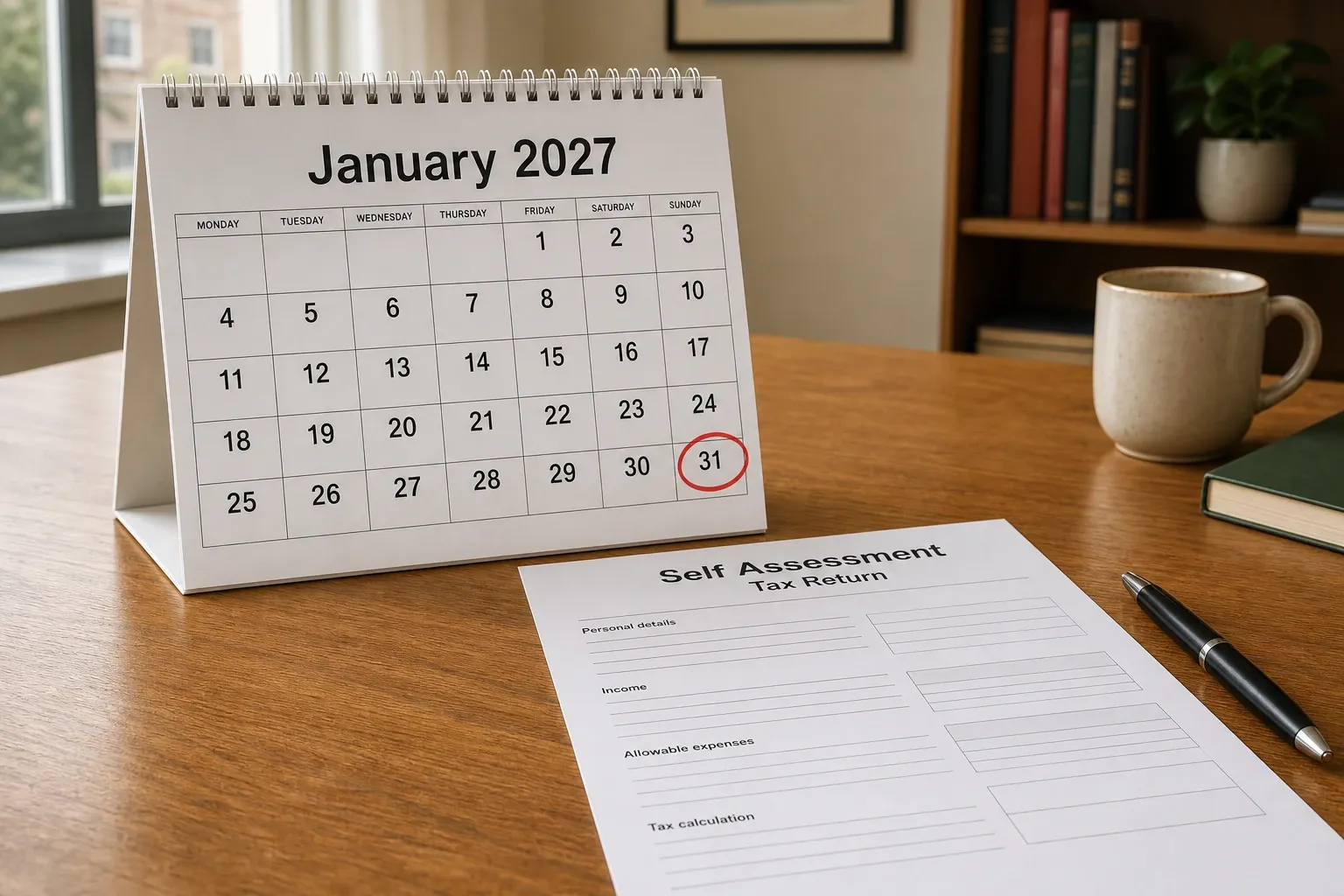
| 31 January | Online return and balancing-payment deadline |
Payments on account can create additional 31 January and 31 July payments. The exact obligations depend on the calculation.
Records to prepare
- Income records, invoices and bank statements.
- Business and property expense evidence.
- CIS deduction statements.
- Employment and pension documents.
- Dividend and investment information.
- Foreign income and capital-gains records.
- Student loan and pension-contribution details where relevant.
Common mistakes
- Assuming PAYE employment means Self Assessment can never apply.
- Registering too close to the filing deadline.
- Reporting only one source of income.
- Treating CIS deductions as the final tax bill.
- Forgetting payments on account.
- Filing after HMRC’s deadline because the final documents were gathered too late.
What to do
- List every income source for the tax year.
- Check HMRC’s current filing criteria.
- Register early and locate the correct UTR.
- Gather records before January.
- Review payments on account and the payment dates.
- Ask for advice where the position is unclear.
Common questions
Do employees need Self Assessment?
Many do not, but an employee can still need a return for self-employed, property, foreign, investment or other reportable income.
Is Self Assessment only for sole traders?
No. It can also apply to partners, landlords, investors, CIS subcontractors and people with other reportable income.
What is the online filing deadline?
It is usually 31 January after the tax year ends. Check HMRC’s current deadlines for the return in question.
What happens if I file late?
HMRC can charge penalties, and interest can apply to late tax. Charges can increase while the return or payment remains outstanding.
Related guidance
Continue with another useful guide from this topic.

Self Assessment
Accounting and Tax for Sole Traders in the UK
A practical guide to sole trader registration, Self Assessment, expenses, records and tax deadlines.
Self Assessment
When Is the Self Assessment Deadline?
Key UK Self Assessment dates for registration, paper returns, online returns, tax payments and payments on account.
Self Assessment
What Is a UTR and How Do You Get One?
A practical guide to Unique Taxpayer References for Self Assessment, limited companies and CIS subcontractors.
Need tailored support?
Talk through your position with Sparks
Bring your questions and records to a free consultation. We will explain the next steps in clear, practical terms.