
What Is a UTR and How Do You Get One?
A practical guide to Unique Taxpayer References for Self Assessment, limited companies and CIS subcontractors.
AI-assisted official-source check · 7 September 2026 — Meaning and use of UTR.
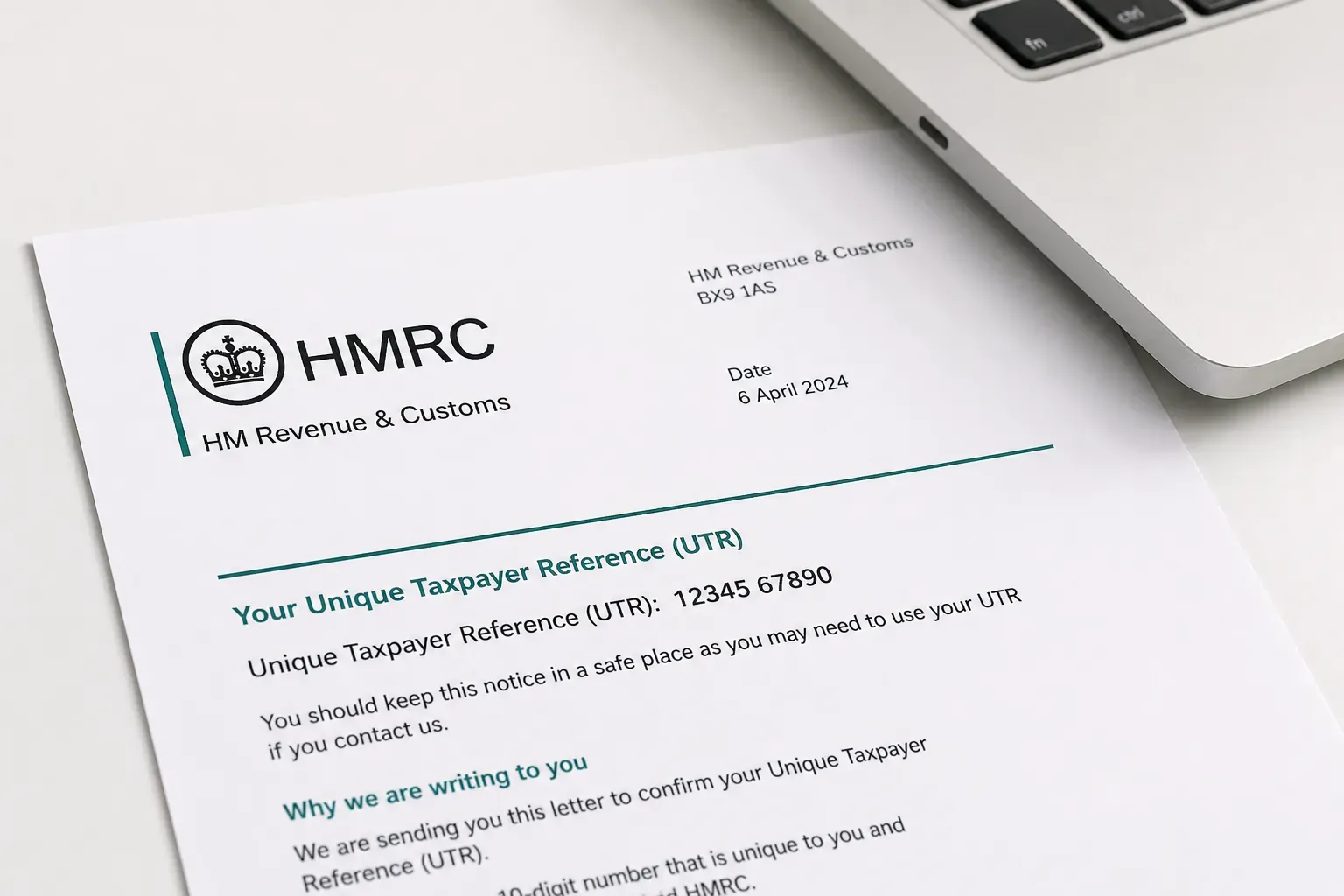
In brief
A UTR is a 10-digit Unique Taxpayer Reference issued by HMRC. Individuals normally receive one after registering for Self Assessment, while a limited company has its own UTR for Corporation Tax. Use the correct personal or company reference for filings, payments and CIS.
What a UTR is
A UTR, or Unique Taxpayer Reference, is a 10-digit reference HMRC uses to identify a taxpayer or company. Individuals commonly receive a UTR when they register for Self Assessment. A limited company receives its own UTR for Corporation Tax.
You may also see the reference described as a “UTR number”. The important point is to use the reference for the correct taxpayer and tax record.
Personal UTR and company UTR
A sole trader, landlord or other individual filing Self Assessment normally uses a personal UTR. A limited company has a separate company UTR for Corporation Tax. A director can therefore have both a personal UTR and a company tax reference.
Do not substitute one for the other. Using the wrong reference can delay filings, payments or correspondence and may cause information to be matched to the wrong record.
When you may need a UTR
- Registering for and filing Self Assessment.
- Registering as a CIS subcontractor.
- Claiming CIS deductions through a tax return.
- Authorising an accountant to deal with HMRC.
- Contacting HMRC about a Self Assessment record.
- Managing a company’s Corporation Tax.
When someone asks for a UTR, confirm whether they need the individual Self Assessment UTR or the company Corporation Tax reference.
How to get a personal UTR
Individuals normally receive a UTR after registering for Self Assessment with HMRC. Register early because HMRC must process the registration and issue the reference before it can be used for a return or CIS registration.
Registration for Self Assessment and registration for CIS are related but not identical steps. A subcontractor should check that both parts of the process have been completed where necessary.
How a company gets its UTR
HMRC normally sends Corporation Tax information, including the company UTR, after incorporation at Companies House. The company must then tell HMRC when it starts business activity and comply with its Corporation Tax responsibilities.
Where to find a UTR
- Your HMRC online account or app.
- Previous Self Assessment returns.
- HMRC Self Assessment letters and payment reminders.
- Corporation Tax correspondence for a company.
- Your accountant’s secure records, if they already act for you.
Treat a UTR as sensitive tax information. Share it with your accountant or another authorised party through a secure channel, not casually in public messages.
UTR and CIS
CIS subcontractors commonly need a UTR so that contractors can verify them. A subcontractor who is not registered or cannot be verified may have deductions taken at the higher rate. Getting the UTR and CIS registration in place early helps avoid preventable problems.
Common UTR mistakes
- Confusing the UTR with a National Insurance number.
- Confusing a personal UTR with the company’s tax reference.
- Searching for the reference only a few days before a deadline.
- Assuming that having a UTR means every required tax registration has been completed.
- Sending the reference through an insecure channel.
What to do next
- Confirm whether you need a personal or company reference.
- Check your HMRC online account and previous correspondence.
- Register for Self Assessment if you need to file and have not registered.
- Complete CIS registration separately where it applies.
- Store the UTR securely and use it on the correct tax record.
Common questions
Is a UTR the same as a National Insurance number?
No. They are separate references used for different parts of the UK tax system.
Do limited companies have a UTR?
Yes. HMRC issues a company UTR for Corporation Tax. A director may separately have a personal UTR for Self Assessment.
Do I need a UTR for CIS?
CIS subcontractors commonly need a UTR to register and be verified correctly by contractors.
Can I file Self Assessment without a UTR?
You normally need a UTR to file a Self Assessment return, so registration should be completed well before the deadline.
Related guidance
Continue with another useful guide from this topic.

Self Assessment
Accounting and Tax for Sole Traders in the UK
A practical guide to sole trader registration, Self Assessment, expenses, records and tax deadlines.

Self Assessment
When Is the Self Assessment Deadline?
Key UK Self Assessment dates for registration, paper returns, online returns, tax payments and payments on account.

Self Assessment
What Is Self Assessment and Who Needs It?
Understand when you may need to file a UK Self Assessment tax return and what information HMRC expects.
Need tailored support?
Talk through your position with Sparks
Bring your questions and records to a free consultation. We will explain the next steps in clear, practical terms.