
When Is the Self Assessment Deadline?
Key UK Self Assessment dates for registration, paper returns, online returns, tax payments and payments on account.
In brief
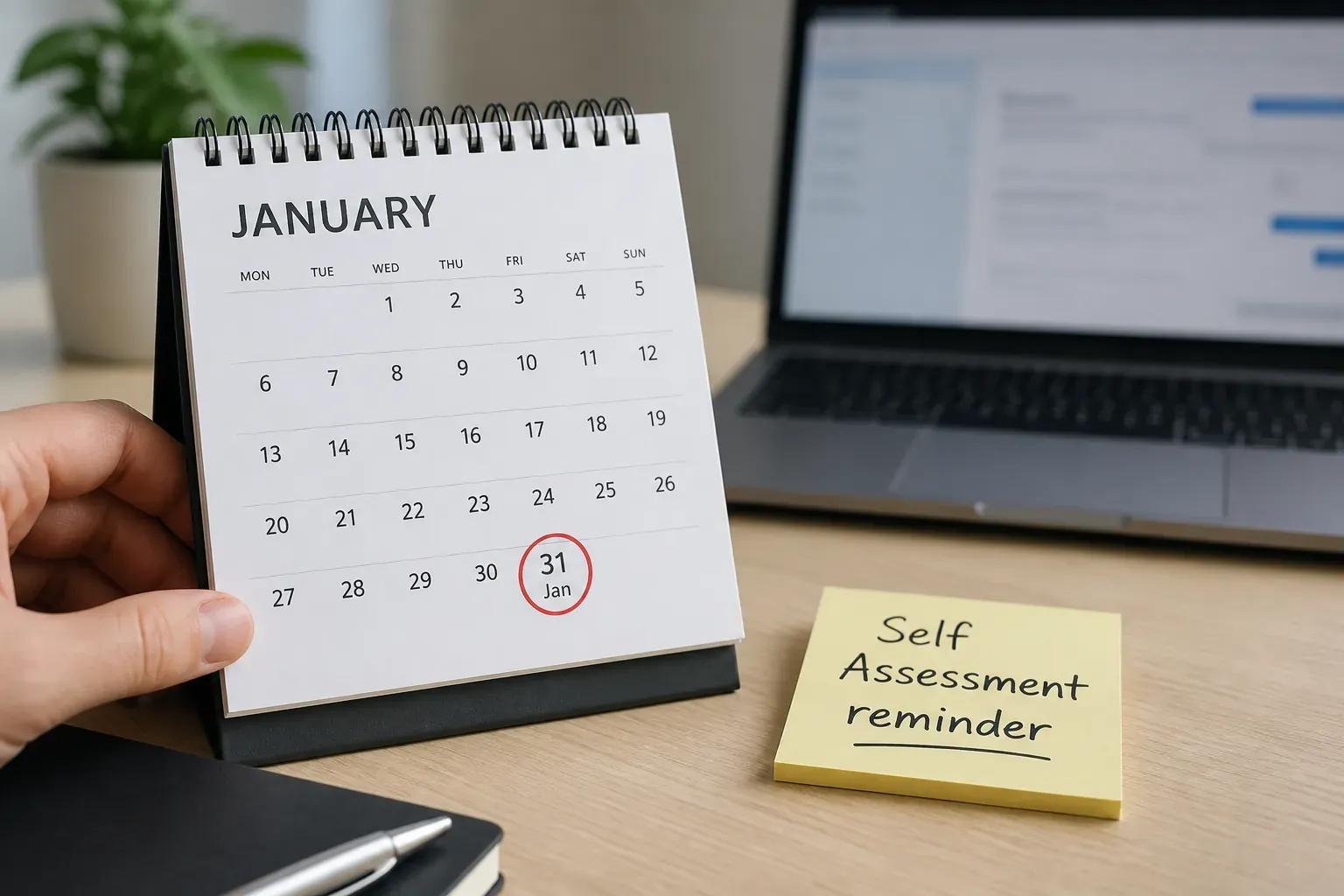
The main online Self Assessment deadline is usually 31 January after the tax year ends. Paper returns are generally due by 31 October, and new filers normally notify HMRC by 5 October. Tax is usually payable by 31 January, with a second payment on account by 31 July where applicable.
Who this guide is for
This guide is for individuals, sole traders, landlords, CIS subcontractors, directors and anyone else who may need to file a Self Assessment tax return.
It is especially useful if you are filing for the first time or have more than one income source.
The UK tax year
The UK tax year starts on 6 April and ends on 5 April the following year.
For example, the 2026/27 tax year starts on 6 April 2026 and ends on 5 April 2027.
Self Assessment deadlines come after the tax year has ended. This is why returns often refer to a tax year that has already finished.
Registration deadline: 5 October
If you need to complete a tax return for the previous tax year and you have not sent one before, or you need to reactivate Self Assessment, you generally need to tell HMRC by 5 October.
You normally do this by registering for Self Assessment.
Registering late can create problems because you may need a UTR and online access before you can file correctly.
Paper tax return deadline: 31 October
Paper tax returns are usually due by 31 October after the end of the tax year.
Most people now file online, but the paper deadline still matters if you choose or need to submit a paper return.
Online tax return deadline: 31 January
The online filing deadline is usually 31 January after the end of the tax year.
For example, for the tax year ending 5 April 2027, the online filing deadline is usually 31 January 2028.
Leaving the return until January creates pressure and increases the risk of missing records or making mistakes.
Payment deadline: 31 January
The tax due for the year is usually payable by 31 January.
This is the same date as the online filing deadline, but filing and paying are separate actions. Submitting a return does not automatically mean the tax has been paid.
Payments on account
Some taxpayers need to make payments on account towards the next tax bill.
Payments on account are usually due on 31 January and 31 July. They can surprise people filing Self Assessment for the first time because the January payment may include both balancing tax and the first payment on account.
Practical example
You are self-employed during the 2026/27 tax year, which ends on 5 April 2027.
If you need to register, you would normally tell HMRC by 5 October 2027.
If filing online, the tax return and payment would usually be due by 31 January 2028.
If payments on account apply, a second payment on account may be due by 31 July 2028.
Common mistakes
A common mistake is thinking the tax return is for the current calendar year. Self Assessment follows the UK tax year.
Another mistake is filing on time but forgetting to pay the tax.
Many people also register late and then struggle to get their UTR and online access before the filing deadline.
Finally, payments on account are often missed because people do not budget for them.
What to do next
To stay ahead:
- Check whether you need to file.
- Register by 5 October if required.
- Gather records after 5 April.
- File early where possible.
- Budget for tax due by 31 January.
- Check whether payments on account apply.
Common questions
What is the Self Assessment deadline for online returns?
The online deadline is usually 31 January after the end of the tax year.
What is the paper tax return deadline?
Paper returns are usually due by 31 October.
When do I need to register for Self Assessment?
You usually need to tell HMRC by 5 October if you need to complete a tax return for the previous tax year and have not already registered.
Is payment due on the same day as filing?
Often, yes. Tax due is usually payable by 31 January.
Related guidance
Continue with another useful guide from this topic.

Self Assessment
Accounting and Tax for Sole Traders in the UK
A practical guide to sole trader registration, Self Assessment, expenses, records and tax deadlines.
Self Assessment
What Is a UTR and How Do You Get One?
A practical guide to Unique Taxpayer References for Self Assessment, limited companies and CIS subcontractors.
Self Assessment
What Is Self Assessment and Who Needs It?
Understand when you may need to file a UK Self Assessment tax return and what information HMRC expects.
Need tailored support?
Talk through your position with Sparks
Bring your questions and records to a free consultation. We will explain the next steps in clear, practical terms.