
What Documents Does Your Accountant Need?
A practical checklist of records to send your accountant for accounts, tax returns, VAT, payroll and HMRC letters.
AI-assisted official-source check · 7 September 2026 — Company banking separation and HMRC agent authorisation.
In brief
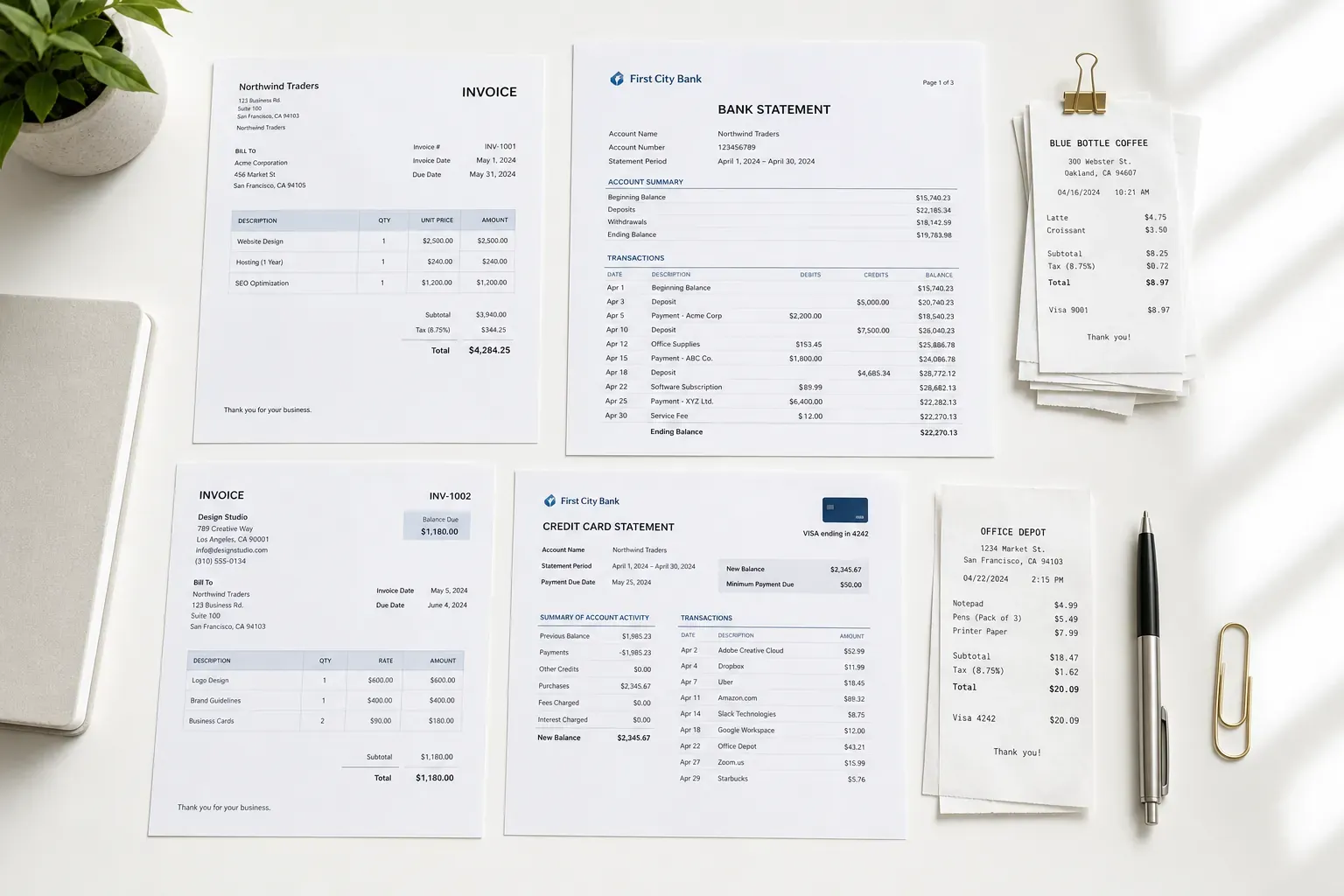
Your accountant usually needs bank statements, sales invoices, purchase invoices, receipts, payroll records, VAT records, loan details, asset purchases, mileage records, HMRC letters and access to the software where you maintain your records, where relevant. The exact documents depend on whether you are a sole trader, landlord, CIS subcontractor or limited company.
Who this guide is for
This guide is for UK small business owners who want to prepare records for their accountant.
It is useful before year end, before a Self Assessment deadline, when changing accountant or when responding to HMRC.
Core records most accountants need
Most accountants will need:
- bank statements
- sales invoices
- purchase invoices
- receipts
- card statements
- loan statements
- finance agreements
- payroll records
- VAT returns
- HMRC letters
- previous accounts and tax returns
- access to the client’s accounting records
If records are missing, the accountant may need to ask follow-up questions.
Limited company documents
For a limited company, your accountant may need:
- company bank statements
- sales and purchase invoices
- director loan account details
- payroll records
- dividend vouchers
- board minutes for dividends
- asset purchase invoices
- finance agreements
- VAT records
- Companies House authentication code
- Corporation Tax references
- previous accounts and CT600 returns
Company money must be kept separate from personal money.
Sole trader documents
For a sole trader, your accountant may need:
- income records
- business expense records
- bank statements
- mileage logs
- home office calculations
- asset purchases
- CIS statements where relevant
- UTR and relevant tax references; authorise your accountant through HMRC, never share your personal sign-in credentials
- details of other income
Self Assessment includes personal tax information as well as business income, so other income sources may matter.
VAT documents
If you are VAT registered, your accountant may need:
- VAT invoices
- VAT return history
- details of VAT schemes
- sales and purchase VAT codes
- import or export records
- partial exemption details if relevant
- access to the client’s accounting records
VAT errors can be expensive, so records should be clear.
Payroll and CIS documents
Payroll records may include payslips, FPS and EPS submissions, P60s, P45s, pension information and employee details.
CIS records may include contractor statements, deduction statements, verification details and monthly returns.
HMRC letters
If HMRC has sent a letter, send the full letter, not just a photo of the first page.
Your accountant needs the reference numbers, dates, deadlines and exact wording of HMRC's request.
Common mistakes
A common mistake is sending only bank statements. Bank statements show payments, but they do not explain what was bought or whether VAT can be reclaimed.
Another mistake is waiting until the deadline before sending records. This leaves little time to fix missing information.
Some business owners also mix personal and business costs, which creates extra review work.
What to do next
Before sending records:
- Download all bank statements for the period.
- Collect invoices and receipts.
- Export transaction and reconciliation reports.
- Add notes for unusual transactions.
- Send HMRC letters in full.
- Tell your accountant about upcoming deadlines.
Common questions
Are bank statements enough?
Usually not. Invoices, receipts and explanations are also needed.
Do I need to send personal income details?
For Self Assessment, yes, your accountant may need details of employment, rental, dividend, savings or other income.
Should I send HMRC letters to my accountant?
Yes. Send the full letter as soon as possible.
Can accounting software replace source documents?
No. Software helps, but source documents and correct categorisation still matter.
Related guidance
Continue with another useful guide from this topic.

Working with an accountant
How to Change Accountant in the UK
What to expect when moving to a new accountant and how to make the handover smoother.

Working with an accountant
Can Accounting Be Done Fully Online?
How digital records, secure document sharing and online accountant support work for UK small businesses.

Working with an accountant
UK Accounting Support in English and Romanian
How bilingual accounting support can help UK business owners understand HMRC, Companies House and tax deadlines more clearly.

Working with an accountant
How Much Does Small Business Accounting Cost?
What affects accounting fees for sole traders, limited companies, VAT and payroll.
Need tailored support?
Talk through your position with Sparks
Bring your questions and records to a free consultation. We will explain the next steps in clear, practical terms.