What Is Making Tax Digital?
A practical introduction to HMRC's digital tax rules for VAT, Income Tax and business record keeping.
In brief
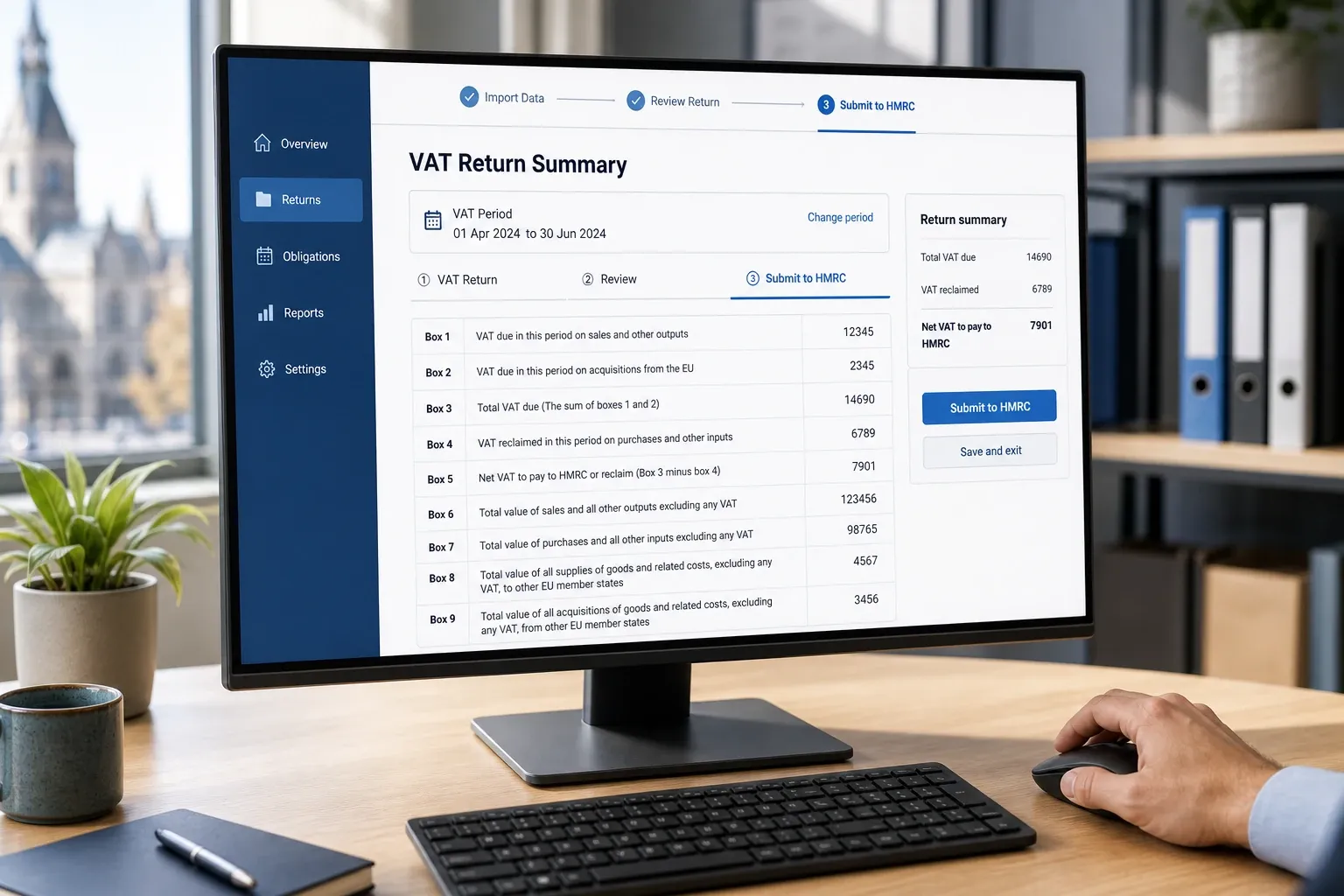
Making Tax Digital is HMRC's programme for keeping tax records and sending submissions through compatible software. VAT-registered businesses already have MTD obligations, and MTD for Income Tax is being introduced in stages for sole traders and landlords. It covers digital records and software links, not merely online filing.
Who this guide is for
This guide is for sole traders, landlords, VAT-registered businesses and small business owners who want to understand what Making Tax Digital means in practice.
It is especially useful if you currently use spreadsheets, paper records or only update accounts at year end.
What is Making Tax Digital?
Making Tax Digital is a set of rules that requires certain taxpayers and businesses to keep digital records and submit information to HMRC using compatible software.
The purpose is to reduce errors, make records more up to date and move tax reporting away from manual, once-a-year processes.
MTD applies differently depending on the tax. VAT and Income Tax have different rules, dates and obligations.
Making Tax Digital for VAT
Most VAT-registered businesses must follow MTD for VAT.
This means they need to keep VAT records digitally and submit VAT returns using MTD-compatible software. Businesses should not treat VAT records as something to recreate at the end of the quarter from memory or paper notes.
Accurate digital VAT records make MTD compliance much easier.
Making Tax Digital for Income Tax
Making Tax Digital for Income Tax affects certain sole traders and landlords. It is being introduced in stages based on qualifying income.
Under MTD for Income Tax, affected people will need to keep digital records, send quarterly updates and make a final declaration using compatible software.
This changes the rhythm of reporting. Instead of thinking about tax only once a year, records need to be kept up to date during the year.
What is compatible software?
Compatible software is software that can keep digital records and communicate with HMRC in the required way.
This may be accounting software, specialist tax software or bridging software in some cases. The right choice depends on your business, VAT position, number of transactions and whether you want your accountant to handle submissions.
Does MTD mean tax is paid quarterly?
No, MTD for Income Tax is about digital records and reporting. It does not automatically mean Income Tax is paid every quarter.
However, quarterly updates can make tax easier to estimate during the year, which may help with budgeting.
Why MTD matters
MTD matters because it changes how businesses keep records. A shoebox of receipts at year end is becoming less practical.
Digital records can also help business owners understand profit, cash flow, VAT liabilities and tax planning earlier, rather than discovering problems after the year has ended.
Common mistakes
A common mistake is assuming that using online banking means you are automatically MTD compliant. Digital bank feeds can help, but MTD requires proper records and compatible software.
Another mistake is waiting until the deadline before choosing software. It takes time to set up categories, bank feeds, invoices and access for an accountant.
Some people also confuse MTD for VAT with MTD for Income Tax. They are connected in principle but have different rules.
What to do next
To prepare for MTD:
- Check whether MTD applies to VAT, Income Tax or both.
- Review how you currently keep records.
- Choose compatible software.
- Set up bank feeds and suitable transaction categories.
- Keep records updated during the year.
- Ask your accountant how submissions will be handled.
Common questions
Is Making Tax Digital only for VAT?
No. MTD already affects VAT, and MTD for Income Tax is being introduced for eligible sole traders and landlords.
Can I keep using spreadsheets?
In some cases, spreadsheets may be used with bridging software, but the setup must meet HMRC's digital requirements.
Does MTD mean I need an accountant?
Not necessarily, but many business owners use an accountant to choose software, check records and handle submissions.
Is MTD the same as Self Assessment?
No. MTD changes how certain income and records are reported, but Self Assessment rules and final tax reporting still matter.
Related guidance
Continue with another useful guide from this topic.
VAT & Making Tax Digital
What Is VAT in the UK?
A plain-English guide to VAT, VAT rates, taxable turnover and what VAT registration means for small businesses.

VAT & Making Tax Digital
Should You Register for VAT Voluntarily?
Understand when voluntary VAT registration may help, when it may hurt and what to check before applying.
VAT & Making Tax Digital
Who Needs to Use Making Tax Digital for Income Tax?
Understand the MTD for Income Tax thresholds, qualifying income and what sole traders and landlords should prepare for.
VAT & Making Tax Digital
When Do You Need to Register for VAT?
Understand the UK VAT registration threshold, the rolling 12-month test and what to do as your business approaches it.
Need tailored support?
Talk through your position with Sparks
Bring your questions and records to a free consultation. We will explain the next steps in clear, practical terms.