
What Expenses Can a Limited Company Claim?
A practical guide to allowable business expenses, record keeping and common mistakes for UK limited companies.
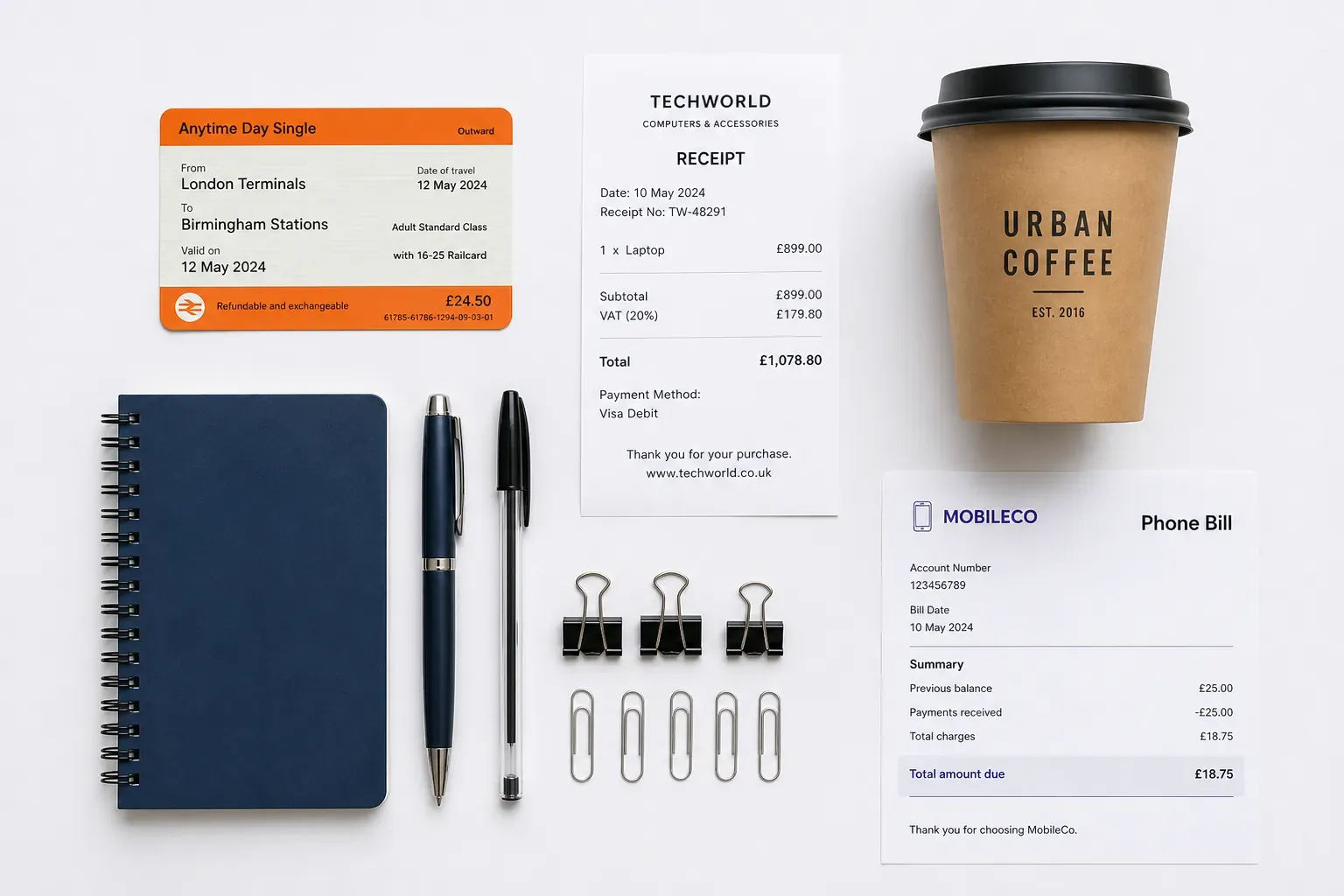
In brief
A UK limited company can normally deduct allowable costs incurred wholly and exclusively for the business, provided they are recorded and treated correctly. Common examples include accountancy, software, office, insurance, marketing and qualifying staff or travel costs; personal and mixed-use spending needs careful treatment.
The core rule: business purpose
A company can usually deduct an expense from profit before Corporation Tax when it is allowable, properly evidenced and incurred wholly and exclusively for the business. Paying something from the company bank account does not by itself make the cost deductible.
The same kind of purchase can have a different treatment depending on the facts. A computer used for company work may be straightforward; a phone or vehicle with private use needs more care.
Revenue and capital expenses
Revenue expenses are day-to-day running costs such as software, accountancy, office supplies and insurance. Capital expenses relate to longer-term assets such as equipment, computers, machinery or vehicles and may be relieved through capital allowances rather than deducted like ordinary running costs.
Check the accounting and tax treatment instead of assuming every purchase is immediately deductible.
Common company expenses
- Accountancy fees.
- Business software and subscriptions.
- Office supplies, postage and stationery.
- Business insurance and relevant professional fees.
- Marketing, advertising, website and hosting costs.
- Staff wages and employer costs.
- Training related to the existing business activity.
- Qualifying business travel.
- Bank charges and business equipment.
This is not automatic approval. Every cost still needs a genuine business purpose, suitable evidence and the correct tax treatment.
Costs that need careful treatment
Cars and vans can have different tax rules, and private use of a company car can create a benefit in kind. Travel from home to a permanent workplace is not treated in the same way as qualifying travel to a temporary workplace.
Working-from-home costs may be claimable under an appropriate method. Client entertaining is usually restricted for Corporation Tax even where it has a commercial purpose. Staff entertaining is governed by different rules and limits.
Personal use and director spending
If the company pays a personal or mixed-use cost, the treatment may require a business/private apportionment, a tax disallowance, benefit-in-kind reporting, reimbursement by the director or an entry to the director’s loan account.
Directors should avoid using the company card for personal spending. When it happens, record it promptly rather than categorising it as a business expense without checking.
How expenses affect Corporation Tax
Allowable expenses reduce taxable company profit and can therefore reduce Corporation Tax. Incorrect claims can instead lead to tax adjustments, interest, penalties and HMRC questions. The objective is to claim every legitimate cost correctly, not to maximise the number of transactions labelled as expenses.
Keep supporting records
- Supplier invoices and receipts.
- Bank and card statements.
- Mileage logs where relevant.
- Contracts or agreements.
- Notes explaining an unusual business purpose.
- Valid VAT invoices when input VAT is reclaimed.
Records must support the annual accounts, Corporation Tax computation and VAT returns where applicable. A bank payment alone may not explain what was purchased or why it was for the business.
Common expense mistakes
- Assuming anything paid from the company bank account is allowable.
- Mixing personal and company spending.
- Losing receipts for frequent small purchases.
- Claiming client entertaining without checking the restriction.
- Treating capital equipment exactly like an ordinary running cost.
- Ignoring VAT or benefit-in-kind consequences.
A practical expense process
- Keep personal and company spending separate.
- Capture the invoice or receipt when the purchase is made.
- Use clear transaction categories.
- Add an explanation for unusual or mixed-use costs.
- Reconcile the bank account regularly.
- Review uncertain costs with the accountant before the return is prepared.
Common questions
Can I claim everything I buy for the business?
No. A cost must be allowable, have a business purpose and be properly evidenced. Some commercially related costs are restricted for tax.
Can a limited company pay for my car?
It can, but company cars and private use can create complex Corporation Tax, VAT and benefit-in-kind consequences. Review them before buying or leasing.
Do I need receipts for company expenses?
Yes. Keep invoices or receipts and any evidence of business purpose. A bank transaction alone may not be enough.
Are client meals tax deductible?
Client entertaining is normally restricted. Staff entertaining and qualifying travel meals have different rules depending on the facts.
Related guidance
Continue with another useful guide from this topic.

Expenses & records
Can You Put a Car Through a Limited Company?
Understand the tax, benefit-in-kind and record-keeping issues before buying or leasing a car through your company.

Expenses & records
Can You Claim Working From Home Expenses?
Understand working from home costs for sole traders, directors and small limited companies.
Need tailored support?
Talk through your position with Sparks
Bring your questions and records to a free consultation. We will explain the next steps in clear, practical terms.