
What Are Dividends and How Do They Work?
A practical guide to dividends, company profits, shareholder payments and tax for UK limited company owners.
In brief
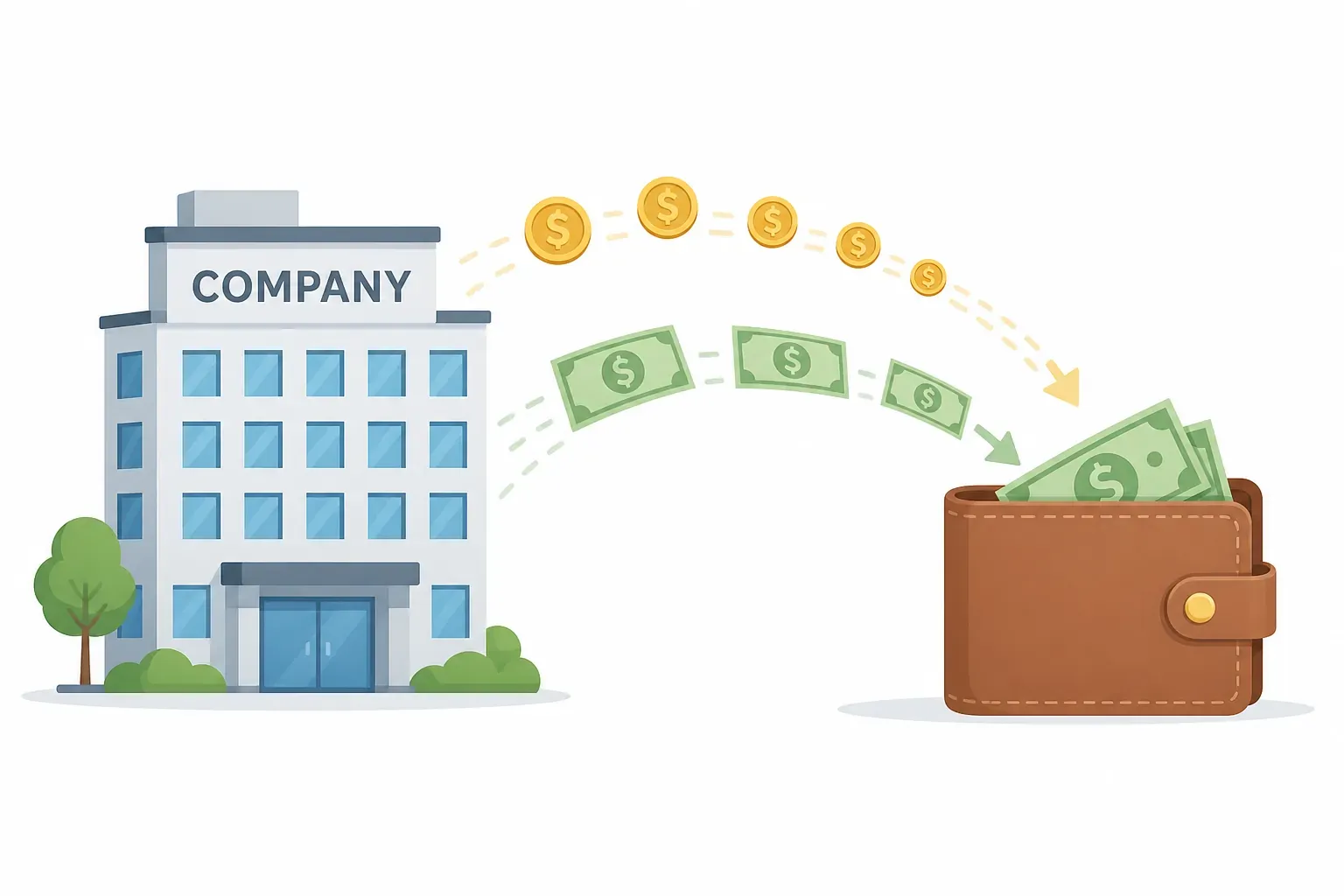
Dividends are company payments to shareholders from available profits. They are separate from salary and PAYE, require proper paperwork and may create personal dividend tax above the allowance. A company should not pay dividends without enough distributable profit.
Who this guide is for
This guide is for UK limited company directors and shareholders who want to understand how dividends work.
It is especially useful for owner-managed companies where the director is also the shareholder.
What is a dividend?
A dividend is a distribution of company profit to shareholders.
If a company has made profit and has enough distributable reserves, it may decide to pay dividends to shareholders. The payment belongs to the shareholder because they own shares in the company.
Dividends are paid after considering the company's profit position. They are not an expense that reduces Corporation Tax in the same way as salary.
Dividends vs salary
Salary is paid for work and is usually processed through payroll. It can involve PAYE, Income Tax, employee National Insurance and employer National Insurance.
Dividends are paid to shareholders because they own shares. They are not payroll and do not attract National Insurance in the same way as salary.
However, dividends can still be taxable personally.
When can a company pay dividends?
A company should only pay dividends from available profits.
Directors should check the company's accounts, current profit, retained earnings, Corporation Tax provision and cash flow before paying dividends.
If a company pays dividends without enough profit, those dividends may be unlawful or need to be corrected.
Dividend paperwork
Dividends should be documented properly.
Typical records include:
- board minutes or written approval
- dividend vouchers
- date of payment
- amount per share
- shareholder details
- company profit position
Good paperwork helps separate dividends from salary, loans or informal withdrawals.
How dividends are taxed
Individuals may pay tax on dividends above the dividend allowance. The rate depends on the person's Income Tax band.
For the 2026/27 tax year, GOV.UK shows dividend tax rates of 10.75% for the basic rate, 35.75% for the higher rate and 39.35% for the additional rate on dividends above the allowance.
Your total income matters because dividends are added to your other income to work out the tax band.
Dividends and Self Assessment
If you receive dividends, you may need to report them to HMRC. Directors and shareholders often need to check whether Self Assessment applies.
This is especially important where dividends are a regular part of how the owner takes money from the company.
Common mistakes
A common mistake is paying dividends when the company has no available profit.
Another mistake is taking money from the company and calling it a dividend later without proper records.
Some directors also forget that dividends are personal income and may need to be reported.
Finally, companies sometimes pay equal dividends incorrectly where share classes or ownership percentages have not been considered properly.
What to do next
Before paying dividends:
- Check company profits and retained earnings.
- Allow for Corporation Tax and other liabilities.
- Confirm share ownership.
- Prepare dividend paperwork.
- Record the payment correctly.
- Check the shareholder's personal tax position.
Common questions
Are dividends tax-free?
No. Dividends may be taxable above the dividend allowance.
Are dividends paid through payroll?
No. Dividends are not salary and are not reported through PAYE payroll.
Can a company pay dividends if it has no profit?
Generally, dividends should only be paid from available profits. Paying dividends without sufficient profit can create problems.
Do dividends reduce Corporation Tax?
No. Dividends are distributions of profit after company profit has been calculated; they are not treated like salary expenses.
Need tailored support?
Talk through your position with Sparks
Bring your questions and records to a free consultation. We will explain the next steps in clear, practical terms.